Need ac repair in Haverhill?
Tell us what your system is doing and when you are home. A local provider in our network can reach out with next steps. No obligation.
No obligationRequest a local AC provider
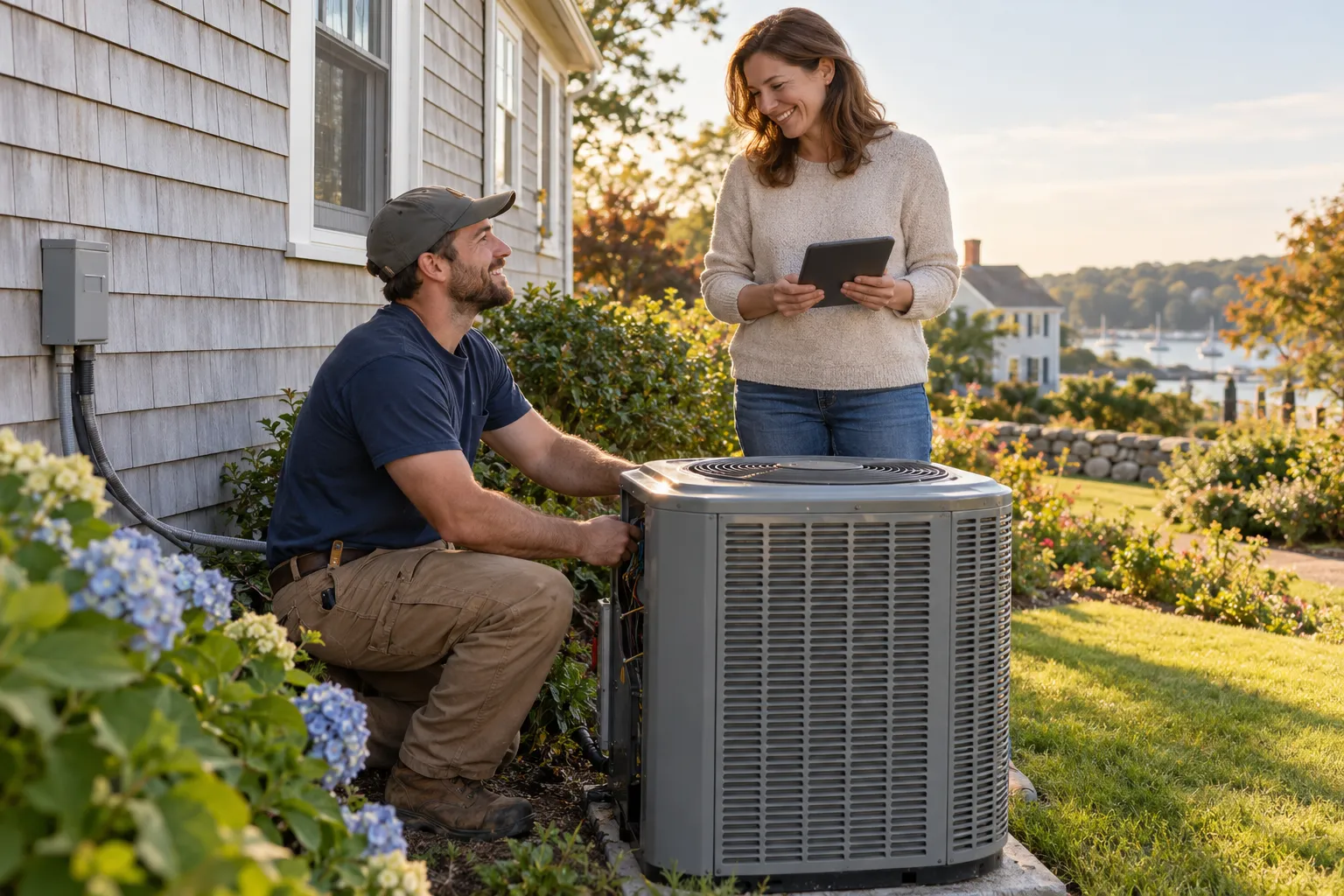
Say you get home and the air inside feels heavy. The AC runs, but nothing cool comes out. Essentiallyhotel Heating & Air is a referral service. We connect homeowners in Haverhill and the Haverhill area with independent providers who handle air conditioner problems.
The providers in our network do the diagnosis and the repair. Essentiallyhotel Heating & Air keeps the first step short, so you can fit it around school runs, work calls and tired evenings. Tell us what you notice, such as weak airflow, ice on a pipe or a unit that will not start. A local provider can then talk through the problem, explain the options and give you a written quote. Small fix, early. That is the goal for every household we help.
Say you walk in after a long day. Dinner is not started. The air feels thick. The AC hums, but nothing cool comes out. This page is for that moment. It shows what to check, what can wait, and how to reach a local provider.
Spend five minutes on these. They are safe and simple.
Ice on the pipes or a puddle by the indoor unit means one thing: turn the system off. Running it can harm the compressor. Let the ice melt, then tell the provider exactly what you saw.
Say it is a heat wave. A baby, an older relative or someone who is ill is home. Treat that as emergency AC repair. Request a callback to check provider availability, and move everyone to the coolest room in the meantime. If you smell burning or see sparks, shut off power at the breaker and step away from the unit.
A small AC problem grows when it is ignored. Here is the usual path.
The system struggles. Rooms drift warmer. Often the cause is a filter, a breaker or a thermostat setting. Small fix, early.
If the unit keeps running while it is weak, the parts work harder. A low charge or a tired capacitor can strain the compressor. Humidity builds, and the whole house feels sticky.
Ice can melt into water and soak a ceiling or a basement corner. Damp spots invite mold. A repair that was once small now has more pieces, and a bigger bill can follow.
Any one of these is a good reason to ask a provider to take a look.
Say you have school pickup at three and a work call at ten. Tell the provider up front. Many providers offer visit windows, and many can respond quickly. Ask for a window that suits your day, and ask if they can send a message before they arrive. Clear a path to the indoor and outdoor units, and keep pets in a quiet room.
The provider listens to your story. Then they check the thermostat, filter and electrical parts. They test pressure, airflow and air temperature to find the cause.
You should hear what failed, what the options are, and what each costs before any work starts. Ask for the quote in writing.
After the fix, the provider runs the system and confirms the air is cooling. Ask what they changed and keep the paperwork.
Say your unit is 12 to 15 years old, and this is the second repair in two years. Repairs add up. A rough rule: if one repair costs close to half the price of a new system, ask about replacement. Older systems may also use refrigerant that is costly to refill.
If you are also searching furnace replacement near me, mention it. Heating and cooling often share ducts and a thermostat, so one HVAC service visit can cover both questions.
Cold, snowy winters leave an AC idle for months. Freeze-thaw cycles and coastal storms can loosen wiring and line sets outside. In older homes with full basements, stone or block foundations, or Cape Cod rooflines, ducts can be tight and upper rooms run hot. In multi-family buildings, tell the provider which unit is yours and who shares the system.
You do not have to sort this out alone. Tell us what is going on, and a provider in our network can pick it up from there.
A provider tests airflow, pressure and electrical parts to find why the air is not cooling.
You hear the cause and the options before any work begins.
Capacitors, fan motors, contactors, drain lines and thermostats are often handled during a visit.
Ask for a visit window that works around school runs, work calls and evenings.
Prices vary by system, parts and how hard the unit is to reach. These are typical U.S. ranges only. Always ask the provider for a written quote before work starts, so there are no surprises.
| Item | Typical range | Notes |
|---|---|---|
| Diagnostic visit | $75 – $200 | Often applied to the repair if you proceed |
| Capacitor or contactor | $150 – $450 | Common reason a unit will not start |
| Fan motor replacement | $400 – $900 | Indoor or outdoor fan |
| Drain line clearing | $100 – $300 | Stops leaks and water shutoffs |
| Refrigerant leak repair and recharge | $200 – $1,500 | Depends on leak location and refrigerant type |
| Compressor replacement | $1,200 – $3,500 | Often prompts a repair-or-replace talk |
Share the signs you see, such as warm air, ice, strange noises or a unit that will not start.
We pass your request to an independent provider in our network.
Choose a time that fits around your day and household.
Read the written quote and approve only what you are comfortable with.
Tell us what you notice in a few lines, and the request goes toward a local provider.
Independent providers in our network know the older homes and weather in your area.
Steps stay short so the repair fits around work, school and family time.
Essentiallyhotel Heating & Air refers you. The providers do the work and give the written quote.
Tell us what your system is doing and when you are home. A local provider in our network can reach out with next steps. No obligation.
No obligationTell us what your system is doing and when you are home. A local provider in our network can reach out with next steps. No obligation.
No obligation